


🎨 Art Licensing vs Surface Pattern Design: The Difference Every Australian Artist Should Understand
If you’re an Australian Artist or Creative dreaming of seeing your artwork on products — fabric, homewares, stationery, apparel — you’ve probably come across the terms art licensing and surface pattern design. They’re often used as if they mean the same thing, but they don’t. Understanding the difference between the two can shift the trajectory of your creative business — especially if you’re looking to build income through art licensing in Australia.
Before we dive in…
✨ Want Personalised Guidance?
If you’re looking for an Art Licensing Mentor in Australia or beyond to help you build start your art licensing business, build a commercially strong portfolio, understand licensing agreements and confidently pitch your artwork to brands — you can explore my 1:1 mentoring here:
Now, let’s break this down simply (without the overwhelm).
🎨 What Is Art Licensing?
Art licensing is a business model.
Art licensing is a business model. It’s a commercial agreement where you grant a company permission to use your artwork on their products for a defined period of time, in a specific territory and product category — while you retain full copyright ownership.
In simple terms, you still own your art. The company manufactures and sells the product. You are paid for the usage of your work.
Art licensing isn’t about how you paint or whether you work in watercolour, acrylic, mixed media or digital illustration. It’s about how your artwork generates income. When structured well, it can become a scalable and sustainable revenue stream.
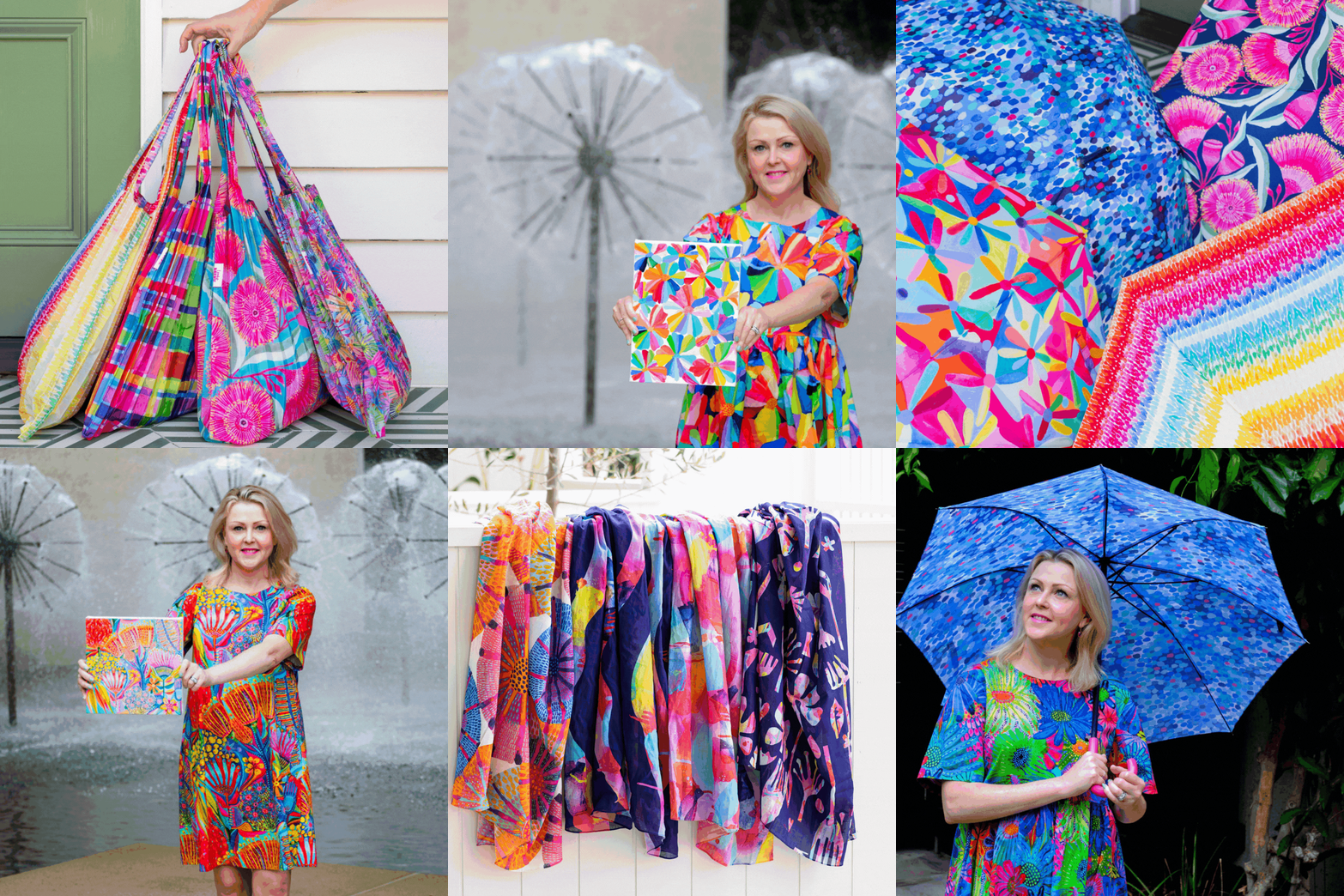
Through licensing, your artwork might appear on fabric collections, home décor, giftware, stationery, apparel, packaging, art supplies or even puzzles and games. The possibilities are broad — and often global.
You still own your art. They manufacture and sell the product, you are paid for the usage. You can be paid through the following income streams:
📊 Royalty-Based Licensing
This is the most common model in commercial art licensing. The artist earns a percentage of product sales — typically between 3–10%, depending on the product category, brand size and agreement. Here’s how it usually works:
✔ You receive a percentage of wholesale or retail sales
✔ Payments are made quarterly or biannually
✔ Sometimes you are paid an upfront advance against future royalties
An advance means you receive a payment upfront, and future royalties are credited against that amount until it is “earned back.” If the product performs well, royalties can continue for years. This model creates ongoing, scalable income — as long as the product sells.
💸 Flat-Fee Licensing
In this model, the artist is paid a one-time fee for use of the artwork. There are no ongoing royalties. This approach is often used for short-term projects, limited production runs or marketing campaigns where sales tracking may not be practical. There are no future royalties. Flat-fee licensing can be appropriate in certain situations — especially when royalties would be difficult to track or administer.
✨ Hybrid Agreements
Some licensing agreements combine both structures. You might see an advance fee plus royalties, or a guaranteed minimum royalty built into the contract. These variations are negotiated based on projected sales volumes and brand scale.
Many artists undervalue their work simply because they don’t understand licensing structures. Understanding these pricing structures is essential if you want to build a profitable art licensing business in Australia or internationally. Knowing how royalty-based licensing differs from flat-fee licensing allows you to:
- Price confidently
- Negotiate professionally
- Protect your long-term earning potential
- Avoid signing away future income unknowingly
💡 What Is Surface Pattern Design?

Surface pattern design on the other hand is a creative discipline. It focuses on creating repeating artwork intended for surfaces such as fabric, wallpaper, stationary, textiles, wrapping paper, homewares and many more products. Surface pattern designers specialise in seamless repeats, coordinating collections, multiple colourways and production-ready files. It’s a technical skill set centred around how artwork is constructed and applied across products. This is where many artists get confused. They assume that to enter art licensing, they must first become surface pattern designers. That simply isn’t true.
Surface pattern designers specialise in:
- Seamless repeats
- Coordinating collections
- Multiple colourways
- Print scale
- Production-ready digital files
It’s a technical design skill. It’s about building repeat tiles and collections that work beautifully across surfaces.
🤝 So What’s the Real Difference?

Surface pattern design is about how you design. Art licensing is about how you monetise. You can absolutely be a surface pattern designer who licenses your work. You can also be a fine artist, a mixed media artist, a photographer, an illustrator or a crafter who licenses standalone pieces. When I began art licensing, I started with standalone artworks — not repeat patterns. Licensing is about commercial application, not just pattern construction.
Brands regularly license:
- Standalone florals
- Hand-painted artwork
- Photography
- Motif groupings
- Placed illustrations
- Typography
- Abstract pieces
- Character art
- Pattern repeats
🌈 Why This Matters for Artists
Here’s where I’m going to say it clearly....You do not need to “become a surface pattern designer” to start licensing your artwork. When I started art licensing, it was with stand alone artworks, not surface patterns. Understanding art licensing allows you to tap into that demand without carrying the weight of manufacturing, inventory and distribution yourself. Licensing shifts production to the manufacturer while you focus on creating cohesive, commercially viable collections.
To get started you need:
✔ Cohesive collections
✔ Commercial awareness - looking at trends
✔ Professional presentation
✔ Understanding of licensing agreements
✔ Confidence in your copyright
The Australian Advantage
Australian artists bring something genuinely powerful to the global design market. Our native flora and fauna, bold sun-drenched colour palettes and strong homewares and gift industry create distinctive commercial appeal both locally and internationally.
There is increasing global demand for Australian design — particularly across fabric, stationery, home décor and lifestyle products. International brands are actively looking for artwork that feels fresh, vibrant and regionally distinctive. Australian creatives naturally bring that perspective. When positioned strategically, Australian artwork translates beautifully across global markets. What feels familiar to us — gum blossoms, native botanicals, bright coastal palettes — often feels unique and desirable overseas.
💸 Why Art Licensing Builds Long-Term Income
Licensing shifts that load to the manufacturer while you can focus on creating joyful, commercially viable artwork. They focus on production and distribution and you earn from the agreement.
🧠 Creating With Licensing in Mind
When you begin thinking like a licensing artist, your questions change.
You start asking:
- Where would this artwork live?
- Could this become a full collection?
- Does this scale well across product categories?
- Would this suit an Australian homewares brand?
- Could this appeal to an international market?
- Is this commercially clear and cohesive?
That mindset shift alone elevates your portfolio dramatically.
✨ Ready to Explore Art Licensing?

If you’re serious about building a commercially viable licensing portfolio and want guidance from an experienced Art Licensing Mentor in Australia, I offer personalised 1:1 mentoring sessions where we:
- Audit your current portfolio
- Identify licensing opportunities
- Develop cohesive collections
- Discuss royalty structures
- Strengthen your pitching approach
- Clarify your next commercial steps
You don’t need more random tutorials.
You need direction.
👉 1:1 Art Mentoring & Creative Coaching Sessions with Georgina Forbes of Lordy Dordie
Let’s build something colourful, strategic and sustainable.
💬 Frequently Asked Questions (Art Licensing Australia)
What is art licensing in Australia?
Art licensing in Australia is a business agreement where an artist grants a company permission to use their artwork on products for a defined time, territory and product category while retaining copyright ownership.
Do I need to be a surface pattern designer to license my art?
No. Artists can license standalone illustrations, florals, fine art, abstracts, typography and motif collections. Surface pattern design is a skill — licensing is a business model.
How do I find an art licensing mentor in Australia?
Look for an experienced licensing artist who has worked with manufacturers and understands royalty structures, contracts, portfolio development and pitching strategy. Personalised mentoring can accelerate your understanding and prevent costly mistakes.
Is art licensing passive income?
Art licensing can generate recurring royalty income once agreements are established. However, it requires strategic portfolio development, professional pitching and strong contracts.
What products can Australian artists license artwork for?
Artwork can be licensed for:
- Fabric and textiles
- Home décor
- Stationery
- Apparel
- Giftware
- Packaging
- Art supplies
- Games and puzzles
- Wallpaper